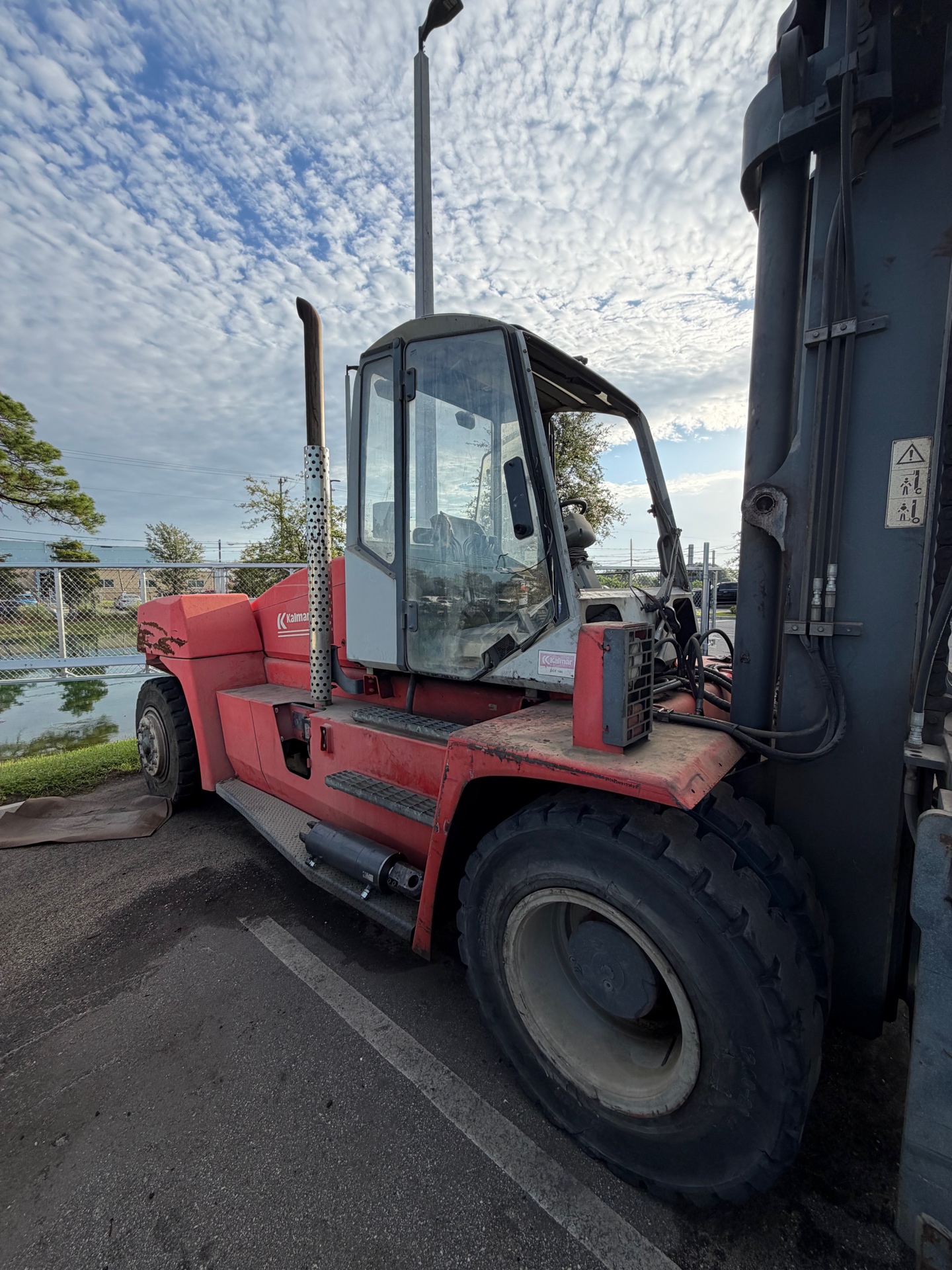
A Kalmar DCE 160-12 forklift returned to operation after Mercury Hydraulics repaired two leaking mast tilt cylinders by machining the damaged internal components instead of replacing two complete cylinder assemblies.
Two rebuilt tilt cylinders still leaked
The customer first had an equipment dealer rebuild and reinstall two leaking mast tilt cylinders. When the forklift was tested after that work, the cylinders continued leaking. The dealer advised the customer that the piston rods were damaged and that two complete new cylinders would be required.
That was the right point to slow down and inspect the individual assemblies. A persistent leak after a rebuild can involve more than the seal set; rod condition, the rod gland, sealing surfaces, internal dimensions, and the rest of the installation all need to be considered before a complete cylinder is written off.
Mercury removed, disassembled, and specified the assemblies
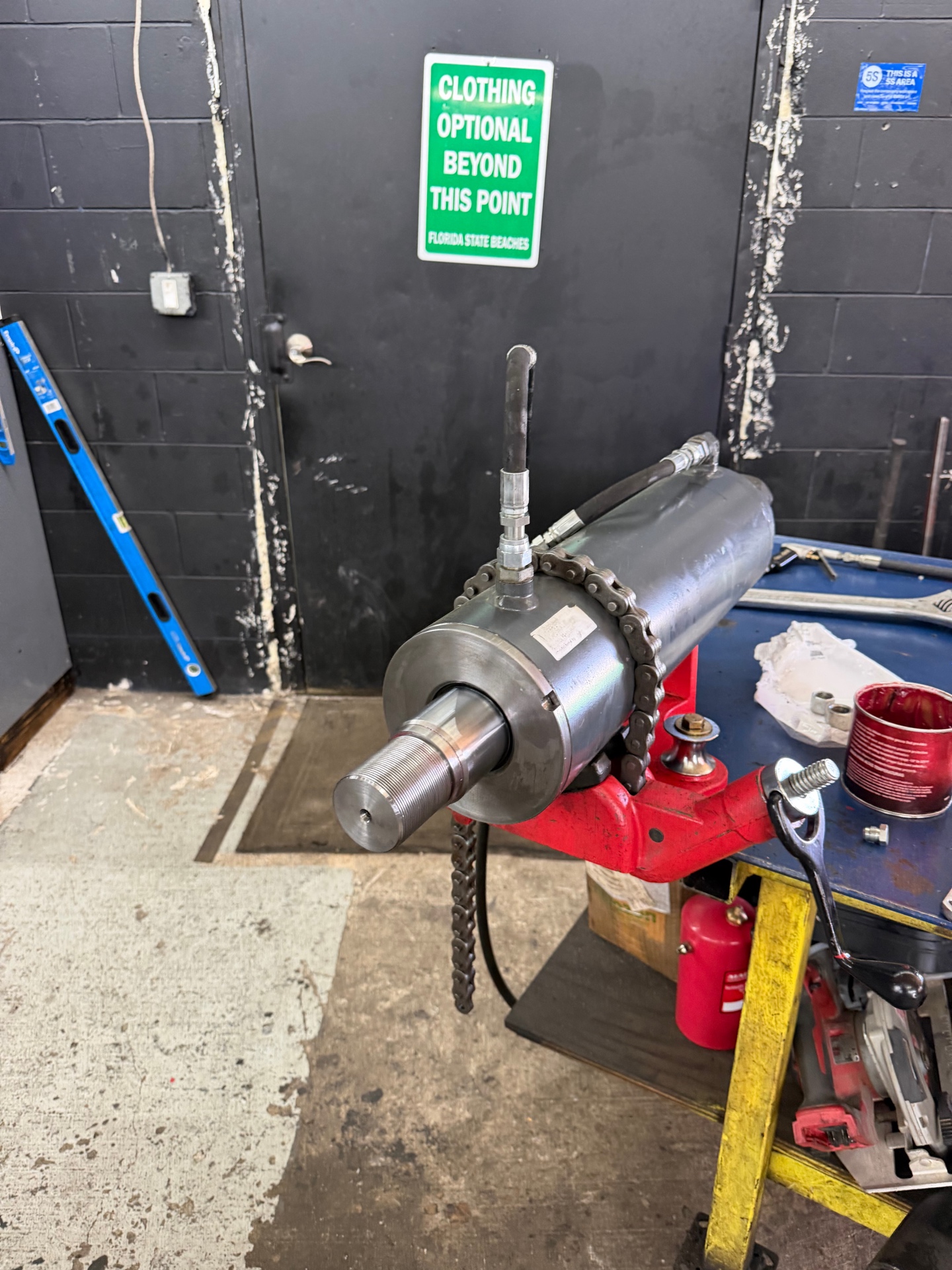
Mercury Hydraulics went onsite to inspect the Kalmar DCE 160-12 and discussed a different repair path before the customer committed to buying two new cylinders. The cylinders were removed from the machine and brought to the Melbourne shop for controlled disassembly, specification, and diagnosis.
Once disassembled, the inspection confirmed that both piston rods needed replacement. It also showed that both rod glands needed replacement. The dealer had told the customer that the rods and rod glands were not available as individual parts and that complete new cylinders were the only option. This job required a repair-driven manufacturing solution rather than a like-for-like catalog purchase.
A complete-cylinder quote is not always the only repair path
On this documented job, Mercury machined two new piston rods and two new rod glands for the two mast tilt-cylinder assemblies. The goal was not to make a generic part fit; it was to restore the specific components after the existing cylinder assemblies had been measured and evaluated.
Kalmar notes that forklift parts are designed for individual applications, which is one reason component identification and measured condition matter before any repair or replacement decision.[1] This case does not mean every damaged rod or gland can be repaired. Corrosion, bore damage, mounting condition, material selection, installed geometry, and parts availability can change the practical answer.
Reinstalled and returned to operation in under a week
Mercury reinstalled the repaired tilt cylinders on the Kalmar DCE 160-12. The owner confirmed that the forklift is now operating in great condition and that the repair path returned the machine to service in less than one week.
The owner also reports that avoiding two complete new cylinder purchases saved the customer more than $20,000. That cost avoidance, timeframe, and result are specific to this documented machine and repair scope. They are not a price, turnaround, or outcome guarantee for another forklift, cylinder design, or failure condition.
What to document before a heavy-forklift cylinder repair
A tilt-cylinder leak should be treated as an equipment safety and reliability concern, not simply a parts-shopping question. Capture the equipment identification, cylinder markings, photos of the installed location, the first visible point of leakage, recent repair history, and any change in mast or tilt response. That information helps separate a rod, gland, seal, bore, hose, or installation issue before an order is placed.
- Forklift make, model, serial details, and the actual cylinder markings
- Clear photographs of the rod, gland, ports, mounts, hoses, and the first visible leak
- Whether a rebuild, reseal, or other work was completed before the current symptom
- Any scoring, corrosion, bending, physical damage, or unusual mast/tilt behavior
- The equipment location, operating urgency, and whether an onsite assessment is needed
Safety and repair limits
This is not a do-it-yourself forklift cylinder-removal or repair procedure. Powered industrial trucks that are not in safe operating condition should be removed from service, and OSHA’s powered-industrial-truck standard states that repairs must be made by authorized personnel.[2] Removal, installation, lifting, blocking, hydraulic-pressure control, functional checks, and any capacity-related decision must follow the applicable manufacturer procedures and be handled by qualified personnel.
Mercury Hydraulics is an independent hydraulic repair shop. This documented case does not represent Kalmar authorization, the use of Kalmar OEM parts, a modification approval, or a capacity certification.
Discuss a forklift cylinder repair with Mercury
For a leaking forklift mast or tilt cylinder, call Mercury Hydraulics at (321) 312-0689 or email spacecoast@mercuryhydraulics.com. Share the forklift identification, cylinder markings, photos, symptom history, and site location before removal or transport so the practical next step can be discussed.