Controlled Breakaway
Use high-force disassembly only where the component and work plan make that approach appropriate.
Hydraulic cylinder manufacturing / Melbourne, Florida
Mercury Hydraulics provides large-bore cylinder overhaul, hydraulic cylinder rebuilding, custom cylinder manufacturing, precision component machining, and high-pressure hydrostatic validation for industrial, marine, mobile, and fleet equipment.
Equipment make, model, cylinder or component number, and the cylinder’s function in the machine.
Failure symptoms, clear photos or video, bore, rod, stroke, mounting, and port information when available.
Operating pressure, expected loading, duty cycle, fluid type, operating environment, and relevant material requirements.
Available prints or drawings, inspection needs, estimated component weight, packaging or fluid-containment condition, handling constraints, and timing needs.
| Cylinder Area | Evaluation Focus | Why It Matters |
|---|---|---|
| Rod And Rod End | Scoring, pitting, bending, thread condition, rod-eye or clevis condition | Surface or alignment damage can affect sealing and the mechanical connection. |
| Barrel And Bore | Surface condition, wear, damage, and suitability for the intended repair path | Internal condition affects piston performance, sealing, and repairability. |
| Piston, Gland, And Seals | Wear, geometry, retention, sealing interfaces, and available replacement path | A visible leak can involve more than the external seal set. |
| Mounting Interfaces | Pins, bushings, mounts, alignment, and load-related evidence | Cylinder life is affected by how the component is loaded and connected to the machine. |
NUTZILLA / High-force disassembly
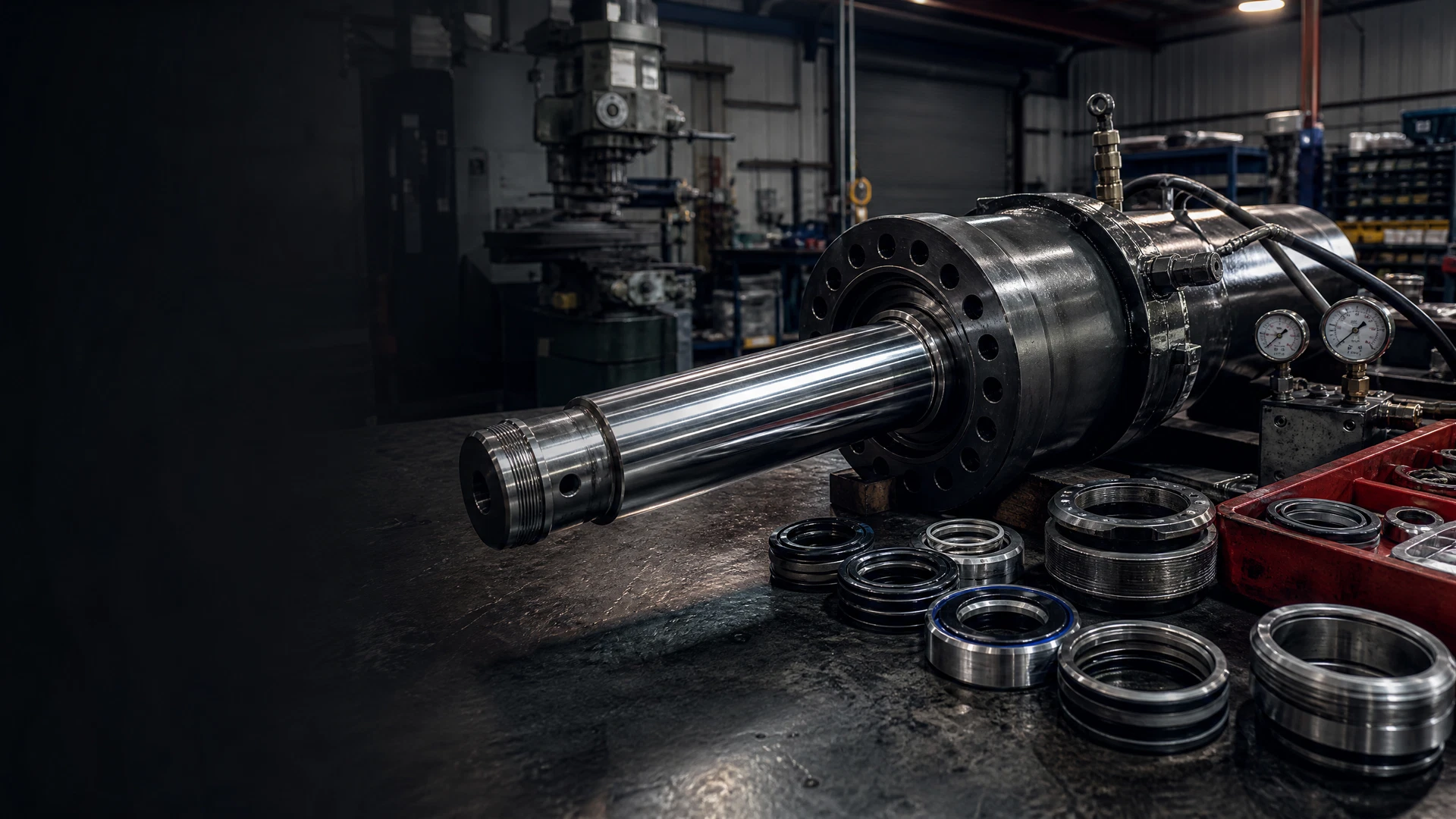
For applicable large-bore or seized-cylinder assemblies, Mercury uses its NUTZILLA hydraulic breakdown bench with up to 75,000 ft-lb mechanical breakaway torque capacity to support controlled disassembly and complete component evaluation.
Bench use and the repair path are determined by the actual cylinder, condition, application, and available information—not by the visible leak alone.
Use high-force disassembly only where the component and work plan make that approach appropriate.
Examine rod, bore, piston, gland, seal, and mounting evidence before discussing a repair or manufacturing path.
Test conditions and acceptance criteria are established for the component and the intended application.
01
Provide an existing cylinder to copy, a damaged component to evaluate, available drawings, or the application requirements that define the replacement question.
02
Mercury can develop the cylinder in its 3-D CAD program, review practical configuration options, and finalize the drawings before machining begins.
03
Once geometry, materials, mounting, pressure, loading, and operating requirements are finalized, Mercury can machine the custom cylinder and related components in-house.
High-pressure hydrostatic validation
For applicable components and test plans, Mercury provides high-pressure hydrostatic oil-bench validation up to 40,000 PSI. Test setup, hold requirements, acceptance criteria, and documentation needs are established for the individual component before release.
Pressure validation is one part of a controlled evaluation process. It does not replace a technical review of material condition, weld integrity, barrel-wall suitability, mounting design, or the broader hydraulic circuit.
Government, Defense, And Maritime Procurement
Mercury Hydraulics supports procurement-screening conversations for demanding industrial, maritime, government, and defense-adjacent hydraulic work. The company’s procurement profile includes CAGE Code readiness, UEI documentation, and Minority-Owned Small Business / Hispanic American-Owned Business status.
Registration status, business identifiers, applicable NAICS classifications—including 333996 (Fluid Power Cylinder and Actuator Manufacturing) where relevant to the proposed scope—testing documentation, material requirements, and contract-specific representations are verified during vendor qualification.
Selected Organizations We Support
NASA, Collins Aerospace, SpaceX, Blue Origin, Canaveral Port Authority, and Northrop Grumman.
These names identify organizations Mercury Hydraulics supports. They do not imply third-party endorsement, authorization, affiliation, or a particular contract or program scope.
Component Familiarity
Mercury evaluates repair opportunities involving components and systems associated with Parker Hannifin, Bosch Rexroth, Eaton Aeroquip, and Danfoss equipment, among other industrial fluid-power products. Brand identification is useful during intake, but the repair path follows component condition, technical information, parts availability, application requirements, and the evidence obtained during evaluation.
Removed components / Ship-in evaluation
Mercury accepts removed, shippable hydraulic components for in-facility evaluation. Before shipment, provide the component identity, application, photos or video, symptoms, dimensions when available, estimated weight, packaging or fluid-containment condition, handling considerations, and the timing needs for the project.
Call the facility before removal or shipment to discuss the component and the practical evaluation question.
Mercury Hydraulics / Melbourne, Florida
Call with the equipment identity, application, cylinder details, symptoms, and available photos. Mercury can discuss the practical next step for an in-facility repair, rebuild, or custom-manufacturing evaluation.
Request A Hydraulic Cylinder Evaluation
Use the current assessment form, call the shop at (321) 312-0689, or email photos and component details. Mercury will discuss the component before promising a particular repair or manufacturing outcome.
Related Mercury Resource
Photos, identification, cylinder dimensions, equipment context and symptoms to send before evaluation.
Open resourceRelated Mercury Resource
Contact first, document the cylinder, and protect its ports and rod before packaging and shipment.
Open resourceRelated Mercury Resource
Understand the information an inspection must establish before a repair cost can be discussed.
Open resourceRelated Mercury Resource
Review pitting, scoring, bending, and the evidence that affects a rod-repair decision.
Open resourceRelated Mercury Resource
See the wider hydraulic repair capabilities that support component evaluation and machining work.
Open resource