HELM
Helm-pump identity
SeaStar and Hynautic helm labels, model or part markings, mount style, input-shaft style, port layout, remote-fill details, and photographs of the complete unit.
Marine hydraulics / Steering repair
Mercury Hydraulics rebuilds SeaStar and Hynautic helm pumps and steering cylinders. Begin with the component identification, vessel information, leak path, and failure evidence—not a guess from a parts listing or a similar-looking online assembly.
Confirmed service scope
Mercury is an independent hydraulic repair shop. A component rebuild does not replace vessel-level diagnosis, installation, bleeding, calibration, or sea-trial procedures.
Repair intake / Component identification
Catalog families can help describe a helm or steering cylinder, but they do not prove interchangeability, availability, internal configuration, or repairability. Mercury starts with the actual component and the system it came from.
ID
Configuration matters
HELM
SeaStar and Hynautic helm labels, model or part markings, mount style, input-shaft style, port layout, remote-fill details, and photographs of the complete unit.
CYL
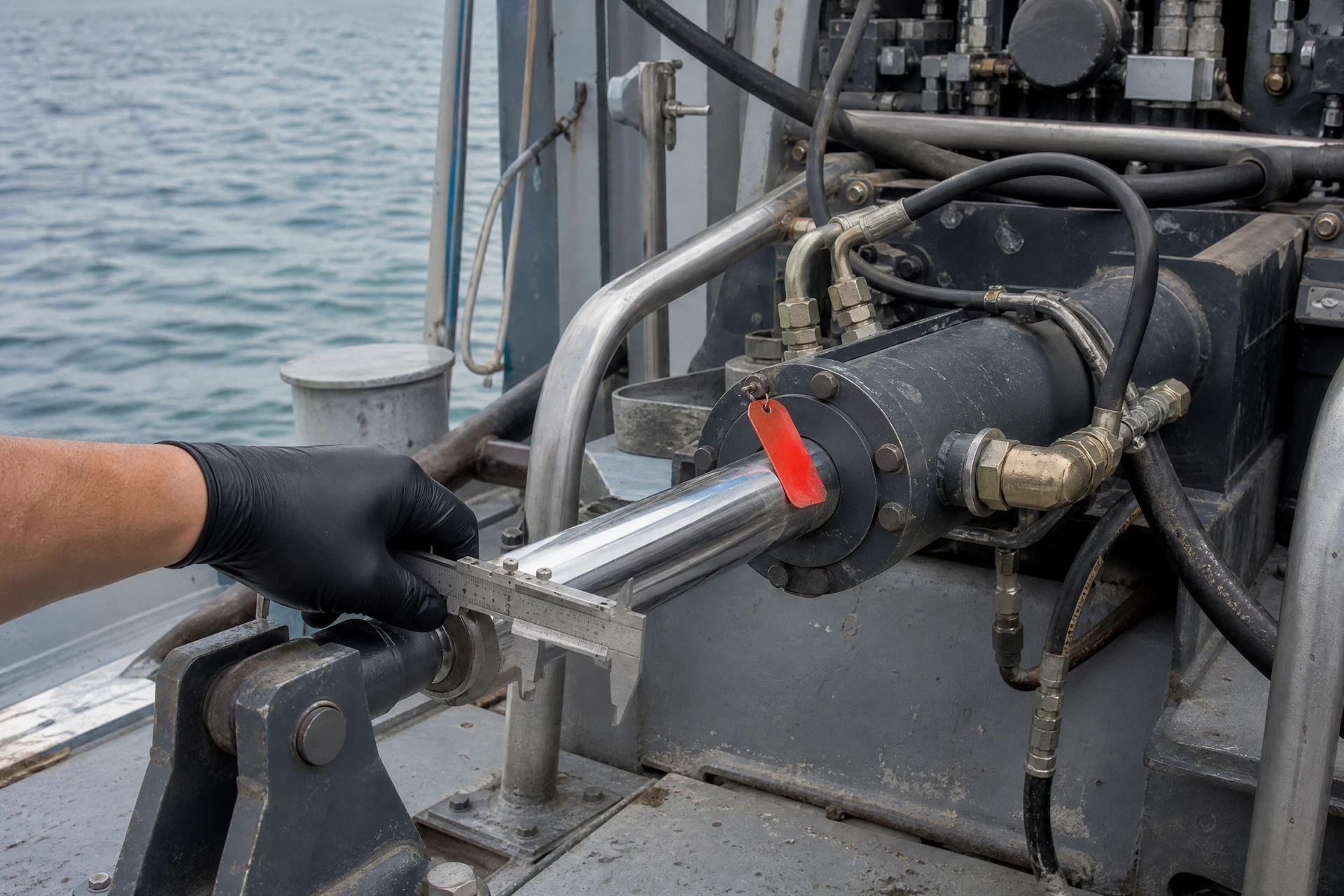
Cylinder markings, rod diameter and surface condition, gland and end-cap details, port configuration, mounts, installed geometry, and images of the first visible fluid path.
SYS
Vessel and year, engine/steering arrangement, symptoms in each direction, recent fluid or hose work, and any prior diagnosis or repair history.
Rebuild capability / Marine steering
Leaking fluid, hard steering, drift, or delayed response may involve a helm, cylinder, hose, fitting, fluid condition, or another system element. A rebuild decision follows inspection of the removed component and the information available.
Mercury evaluates removed SeaStar helm pumps as identified assemblies. The model markings, input-shaft condition, sealing surfaces, ports, fluid evidence, and prior service history guide the repair decision.
Identify / Inspect / Evaluate
Mercury evaluates removed SeaStar steering cylinders for rod condition, gland and sealing surfaces, bore condition, end caps, ports, mounting geometry, and practical component serviceability.
Identify / Inspect / Evaluate
Mercury rebuilds identified Hynautic helm pumps where inspection supports a practical repair path. The complete unit and readable identification are more useful than a parts-list guess.
Identify / Inspect / Evaluate
Mercury evaluates removed Hynautic steering cylinders with close attention to rod, gland, bore, ports, mounts, wear evidence, and the condition of serviceable components.
Identify / Inspect / Evaluate
Helm-pump evaluation
For SeaStar and Hynautic helms, Mercury begins with the complete unit, its model or part markings, port configuration, input-shaft condition, fluid evidence, and service history. Internal service components are not interchangeable by appearance alone.
Cylinder evaluation
For SeaStar and Hynautic steering cylinders, Mercury reviews rod-surface damage, gland and seal condition, bore condition, end caps, ports, and mounting geometry. The findings determine whether a rebuild path is practical for that individual cylinder.
Repair decision / Mercury method
01
Establish the actual helm or cylinder configuration before assuming a replacement listing, seal kit, or similar-looking component applies.
02
Use controlled disassembly and condition evidence to examine critical sealing, rod, gland, bore, port, and mounting surfaces where applicable.
03
Discuss a practical repair path only after the component condition, serviceable elements, and wider steering-system question are understood.
ZEUS actuator service / Mercury facility
For an identified MerCruiser or Cummins ZEUS pod steering actuator, Mercury can perform an in-house disassembly, diagnosis, reseal or rebuild evaluation, and test-stand verification before return shipment.
A complete actuator purchase can be a $20,000–$30,000 decision. The practical alternative depends on the specific actuator, its condition, and the findings after evaluation.
01
Provide readable actuator markings, clear photos, vessel context, and the first visible leak or failure observation before removal.
02
The actuator is evaluated at our Melbourne facility rather than treated as an assumed complete replacement decision.
03
Where a repair path is practical, Mercury completes test-stand verification before the component is prepared for return shipment.
Potential cost avoidance is condition- and application-specific. This is not a price, repairability, turnaround, fitment, or system-performance guarantee.
Inspection evidence / Component condition
Marine steering components operate in a wider system. A visible leak can matter, but the condition of the unit, ports, mounting, rod surfaces, and surrounding steering circuit still needs to be considered before a repair path is discussed.
Ship-in evaluation / Before removal
Clear identification and failure evidence make a ship-in evaluation more useful. Call first so Mercury can discuss the component and the practical repair question before it travels to the Melbourne shop.
Call Mercury before removal or shipment so the component and repair question can be discussed.
Provide the vessel make, model, year, engine/steering context, component model or part markings, and clear photographs of ports, rod, mounts, and the first visible leak.
Describe the symptom: fresh fluid, stiffness, drift, uneven response, fluid loss, or recent steering-system work.
After removal by qualified personnel, retain the component as an identifiable assembly where practical, protect the rod and ports, contain residual fluid, and package it securely for transport.
System context / Marine repair
Hynautic helm guide
Leaks, stiff steering, course wander, and the evidence to document.
Read guideHynautic cylinder guide
Identification, condition evidence, and responsible ship-in preparation.
Read guideZEUS actuator service
Use Mercury’s facility for component evaluation, test-stand verification, and a practical alternative to a complete actuator purchase.
Start assessmentMercury Hydraulics / Melbourne, Florida
Call with the vessel, component markings, symptoms, and photos. Mercury can discuss whether a removed SeaStar or Hynautic helm or cylinder is a practical candidate for evaluation.
Identification before shipment
Call the shop at (321) 312-0689 or use the repair assessment form. We will discuss the next practical step without promising a specific repair outcome before evaluation.