At a cosmetic manufacturing plant, a pneumatic cylinder was holding a kettle lid open instead of closing reliably. The customer requested directional-control and counterbalance-valve changes, but the symptom continued. Mercury Hydraulics followed the behavior beyond the individual parts and found that the shared air compressor could not provide enough airflow for all of the pneumatic machines operating at once.
The Kettle Lid Would Stay Open
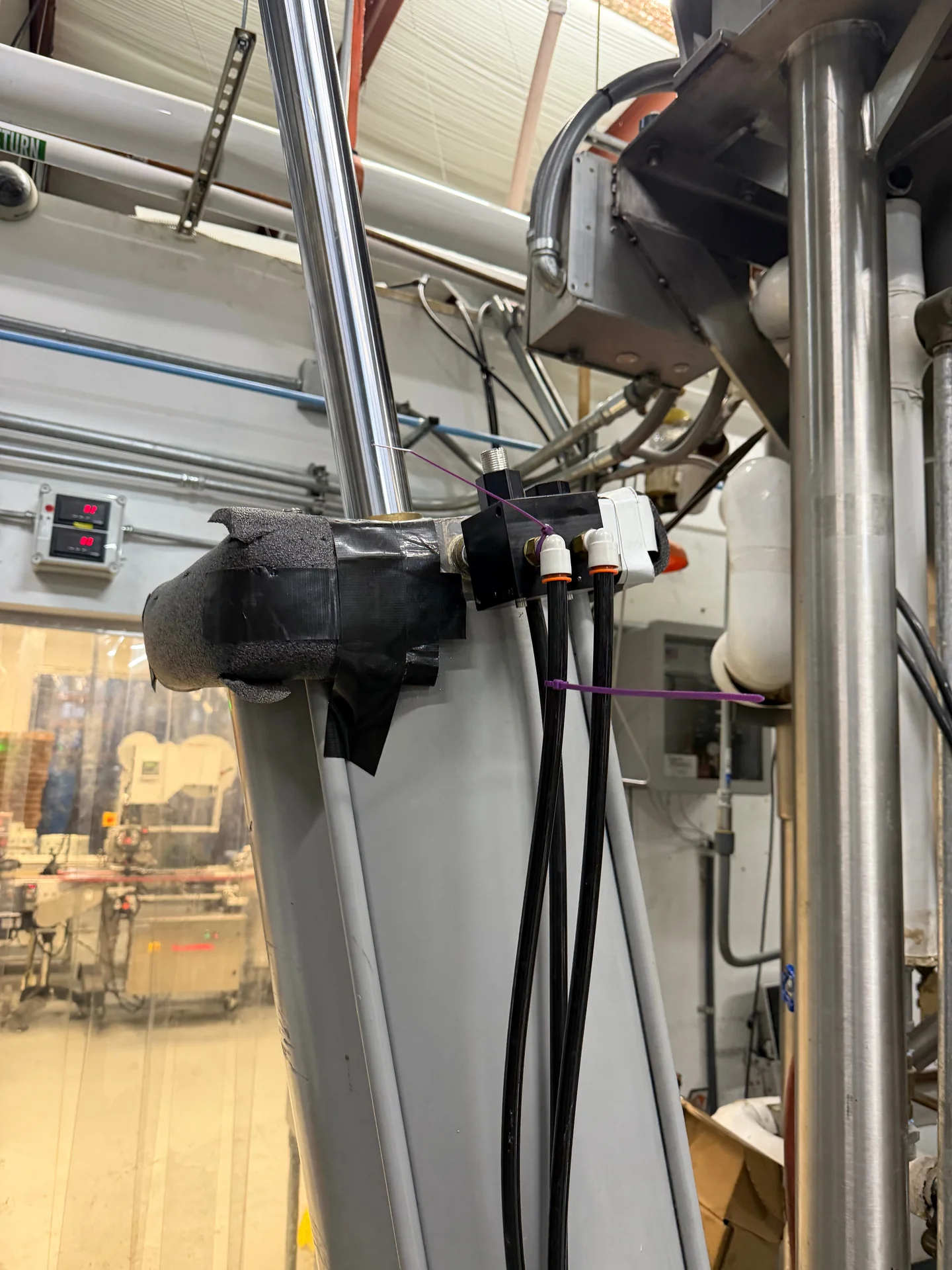
The documented equipment used a large pneumatic cylinder to move a kettle lid. The operating complaint was clear: the cylinder could stay open and would not reliably close the lid.
At the customer’s request, Mercury changed the directional control valve and the counterbalance valve. The condition persisted. That result mattered because it showed that changing those components had not resolved the underlying operating problem.
The Symptom Was Not The Same As The Root Cause
A cylinder that will not move as expected can point attention toward the cylinder, directional valve, counterbalance valve, controls, fittings, or air supply. Treating the first suspect component as the complete diagnosis can add cost without restoring reliable operation.
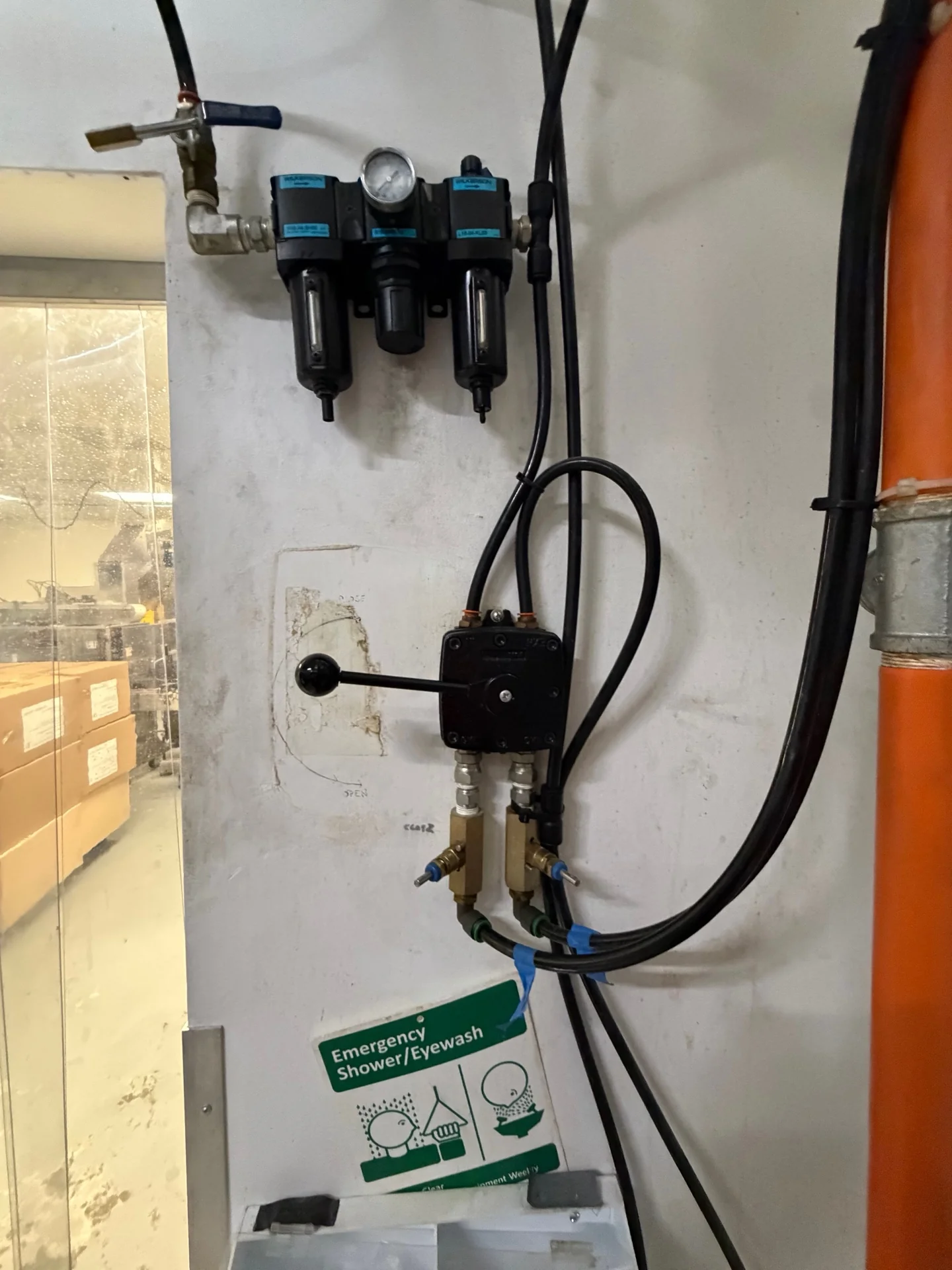
Mercury continued the evaluation by considering the cylinder and controls together with the supply serving the machine. The job photos and inspection footage document the air-preparation equipment, control components, and operating area that had to be considered alongside the cylinder.
The System-Level Finding: Shared Air Demand
The cosmetic plant had added other machines using pneumatic controls from the same air compressor after the kettle was installed. Mercury determined that the compressor could not supply enough airflow capacity for all of the machines operating at the same time.
When other machines were shut down to reduce the air demand, the kettle-lid cylinder could operate and overcome the installed counterbalance control. The condition was therefore tied to available air flow across the shared pneumatic system—not simply to one valve at the kettle lid.
What This Pneumatic Cylinder Diagnosis Considered
| System Area | What The Case Required Mercury To Consider | Why It Matters |
|---|---|---|
| Pneumatic Cylinder | The cylinder’s installed operating role and its inability to close the kettle lid reliably | The visible symptom starts the diagnosis but does not establish the root cause. |
| Directional And Counterbalance Controls | The customer-requested valve changes and the fact that the symptom persisted afterward | A part change that does not resolve the condition is evidence to continue the diagnostic process. |
| Shared Air Supply | Compressor output and air demand from other pneumatic machines added to the plant | A cylinder may lose the air flow it needs when a shared compressor cannot keep up with simultaneous demand. |
| Operating Conditions | The system behavior when other air-consuming machines were shut down | Changing the load on the shared supply helped isolate the factor affecting the kettle-lid cylinder. |
More Than A Part-Swap Approach
Mercury Hydraulics approaches equipment problems as systems. For pneumatic and hydraulic equipment, that means looking beyond the part closest to the symptom and considering the controls, supply, demand, component condition, and operating environment together.
The goal is not to recommend a part first. It is to identify the condition that is actually preventing the machine from operating as intended, then help the customer understand the practical correction path.
Inspection Footage From The Diagnostic Visit
This short clip documents the pneumatic air-preparation assembly and regulator gauge during the job. It is included as job evidence only, not as a service, adjustment, bypass, or operating procedure.
Request A Pneumatic Or Hydraulic Equipment Evaluation
If a cylinder, valve, or control change has not resolved an equipment problem, Mercury can discuss the component, the complete system, the operating symptom, and the surrounding supply conditions. Send equipment identification, photos, a safe video of the symptom if available, any work already performed, and the production conditions under which the problem appears.
Pneumatic and hydraulic systems can store energy. Equipment isolation, troubleshooting, adjustment, repair, and return to operation must follow the applicable site and manufacturer procedures and be handled by qualified personnel.